This is an extended version of the original op-ed that was published in the Des Moines Register.
Leticia Gomez-Espisito, a mom from Tenino, Washington, a rural town outside Tacoma, spent four years trying to conceive her first baby. When she finally became pregnant and felt that first flutter in her second trimester, she promised herself she’d pay careful attention to every movement.
She had no idea that promise would save her daughter’s life. She did a quick Google search for pregnancy resources and downloaded the free Count the Kicks app to help track her baby’s movements, which she began using regularly.
At 30 weeks, sharp pain sent her to the hospital — but her vitals looked fine, so doctors sent her home with a diagnosis of dehydration. The next day, the pain returned worse than before, and her baby began kicking harder and more frequently than ever. Most people would have called the swift kicks a good sign. Because Leticia had been using the app to track her baby’s movements, she knew it wasn’t.
Specialists stood at her bedside, baffled, while she lay there quietly tracking every movement on the Count the Kicks app on her phone — not out of panic, but because she had a graph with her baby’s movement history to show something was off. The CDC lists both a change in a baby’s movements and severe belly pain that doesn’t go away as urgent maternal warning signs. Movement is the way babies communicate to let mom know when something is going wrong during pregnancy.
It took a stray comment about pain, a dropping hemoglobin count, and Leticia’s insistence that her baby’s movements were “not OK” for doctors to piece it together: a 4-centimeter uterine rupture and a blood clot the size of two fists, hemorrhaging silently inside her. She was rushed into an emergency cesarean section and put under anesthesia as surgeons raced to save them both.
It worked. Sixty-three days later, her daughter Gabriella came home from the NICU — alive and healthy because her mother refused to let a “clear” ultrasound and “fine” vitals talk her out of what she already knew. Miraculously, Leticia survived too.
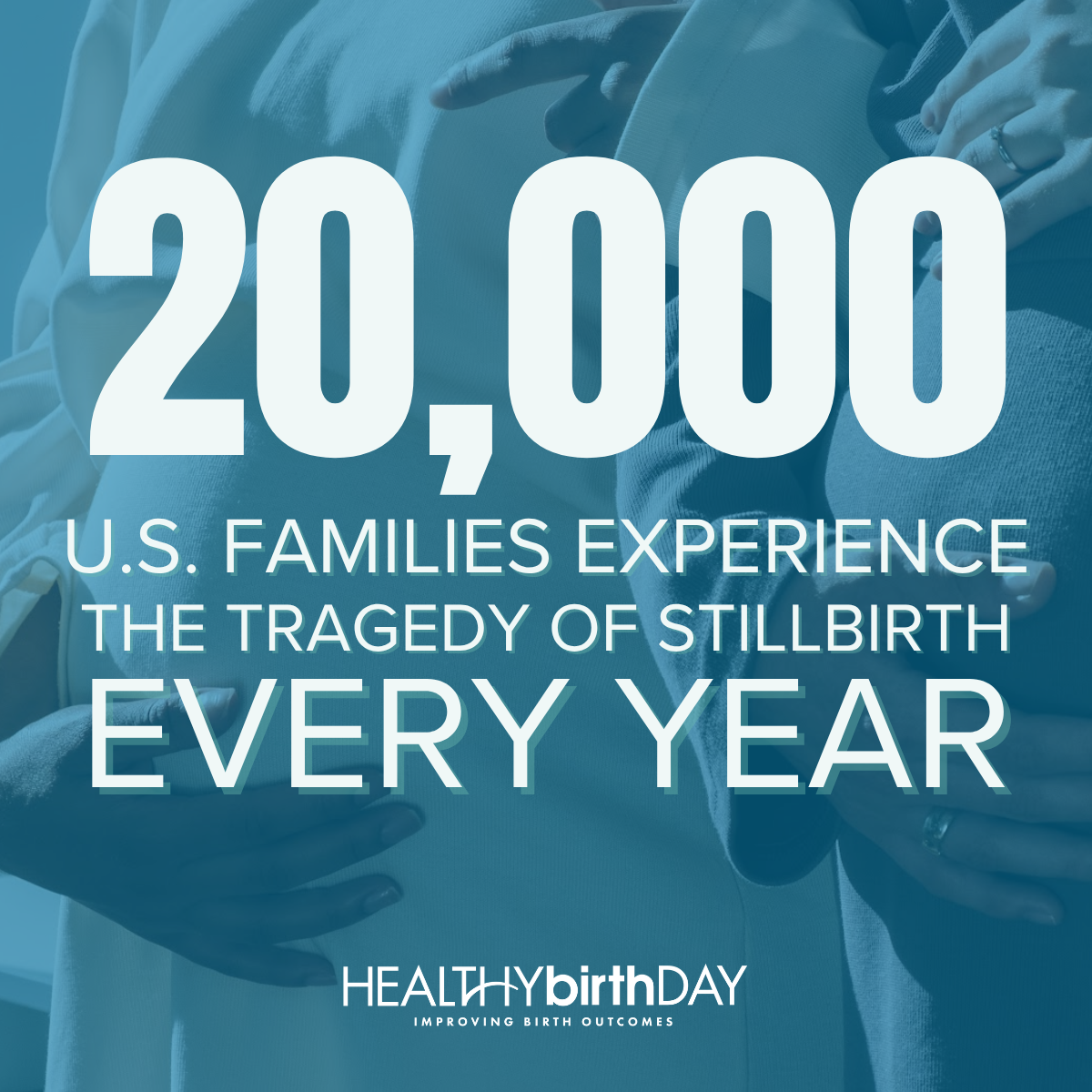
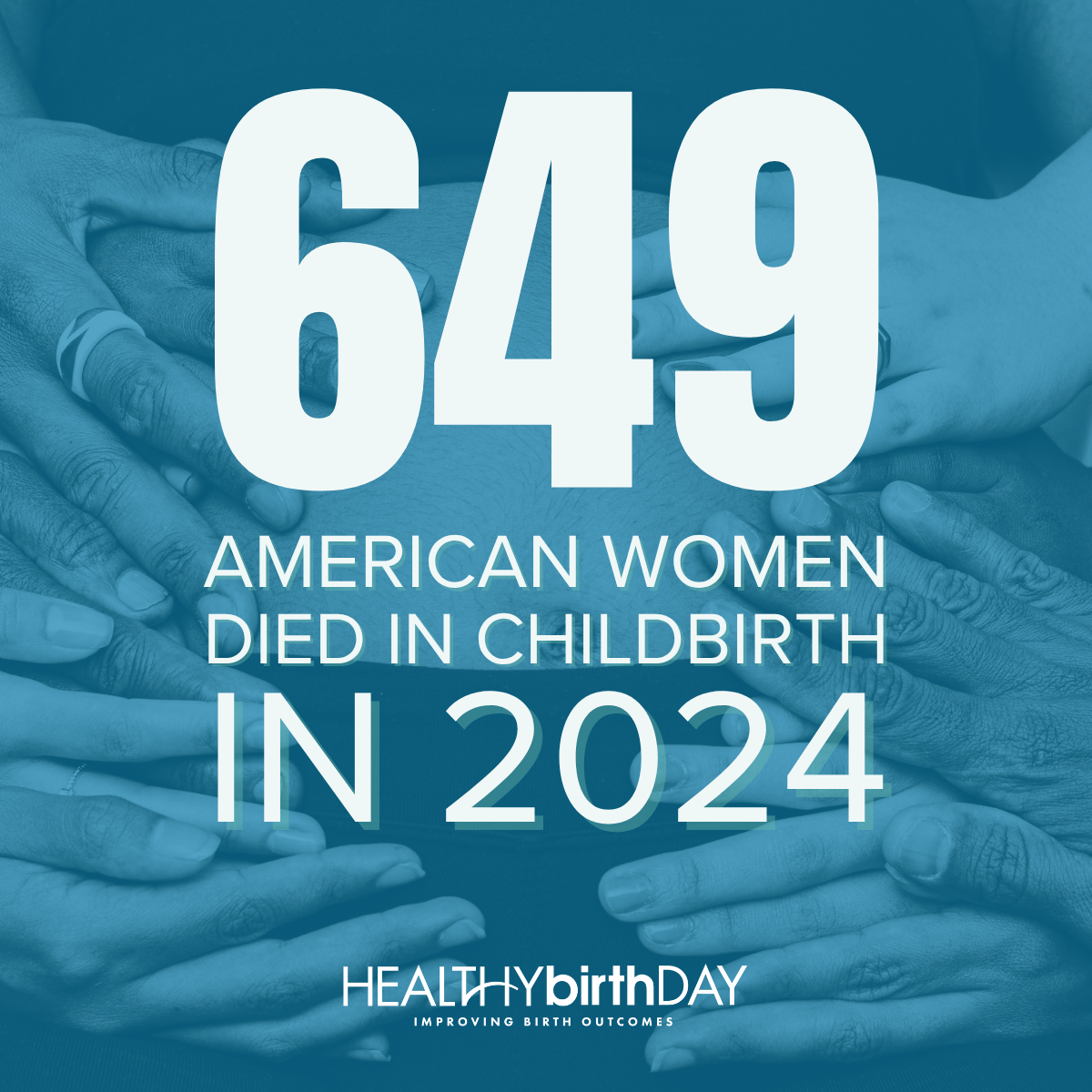
In 2024, 649 American women died during pregnancy, or within 42 days of childbirth, according to the CDC. The U.S. has the highest maternal mortality rate in the developed world. The CDC reports that each year an estimated 60,000 women like Leticia experience life-threatening complications during childbirth. Additionally, each year more than 20,000 families will experience a stillbirth, which is defined as the loss of a baby at 20 weeks or later during pregnancy.
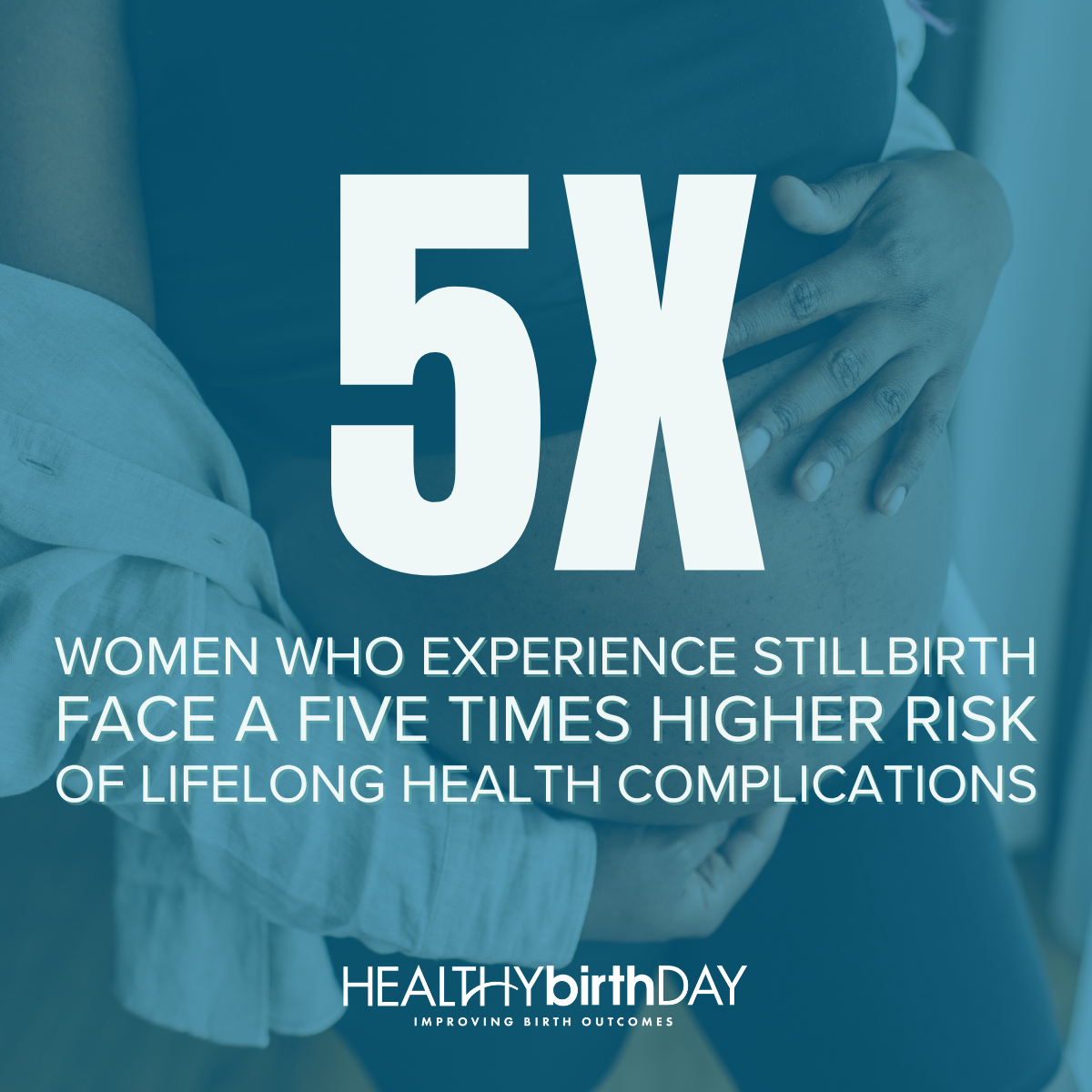
Research shows the health of a mom and the health of her baby are intrinsically connected, and women who experience stillbirth face a nearly five times higher risk of having lifelong health complications. We arrive at the intersection of the stillbirth and maternal mortality crises from different lived experiences and professional perspectives, joined together by the belief that too many lives are at stake, and too much progress is possible for any of us to sit on the sidelines.
Emily’s work is fueled by a personal story: a change in her baby’s movements sparked her doctor to order a non-stress test, which alerted them to dangerous preterm labor at 30 weeks. Her doctor moved quickly to prescribe Procardia to help slow contractions, combined with strict bedrest, to keep her son safe and inside her for 10 more weeks. Hayden was born completely healthy and did not spend any time in the NICU. For the past decade, she helped build the movement that gets stillbirth prevention education into the hands of millions of moms each year.
Sarah, a lifelong educator, is driven by a deep desire to teach others about a simple method for recognizing potential early warning signs during pregnancy. Her passion is deeply personal, shaped by the devastating impact of stillbirth on those she loves — three close friends and a family member have each endured the loss of a baby to stillbirth.
Lee, who is the former Chief of the Women’s Health and Fertility Branch at the CDC, is also driven by the desire to reduce the number of stillbirths that can be prevented. He spent his career focusing on maternal and infant health, including expanding data collection in the Pregnancy Risk Assessment Monitoring System (PRAMS), to include women with stillbirths as well those with live births. It was through a shared connection regarding the importance of data collection on the health of pregnancies that Lee met Emily in 2018.
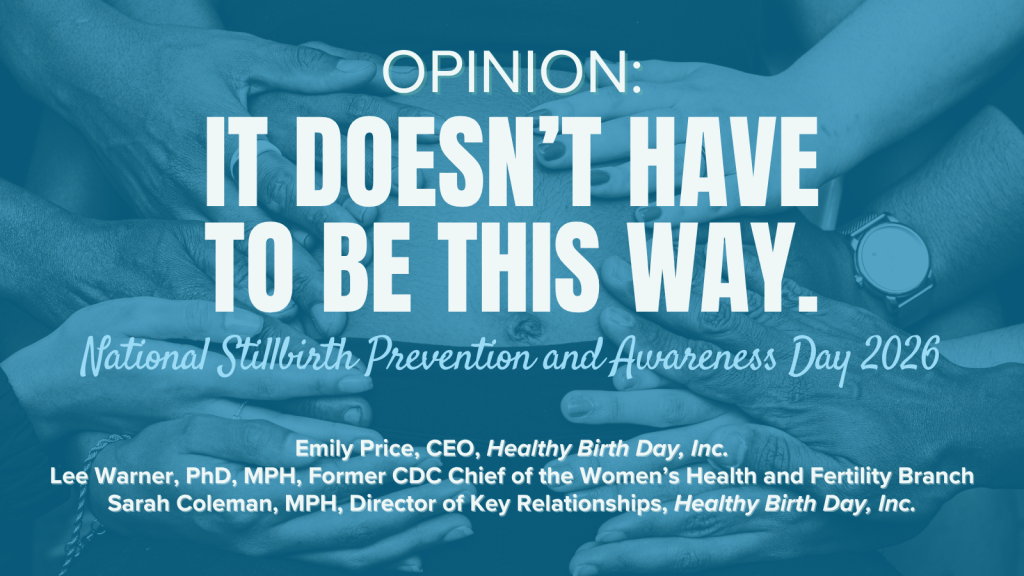
On the fifth annual National Stillbirth Prevention and Awareness Day we share one collective message: It doesn’t have to be this way. Research indicates that at least 25% of all stillbirths are preventable. More than five thousand babies’ lives could be saved annually through greater focus on prevention efforts.
The CDC also calculates that more than 80% of pregnancy-related deaths are preventable with care already available to us. Count the Kicks is one solution that is helping improve birth outcomes for moms and babies. This public health program teaches expectant parents a simple method to become familiar with their baby’s normal movement patterns in the third trimester of pregnancy and empowers them to speak up to their provider when they believe something is off.
So far the program has collected nearly 200 stories from families in 40 states who believe Count the Kicks helped get their baby here safely. For at least 15 of those families, the mom says her life was saved, too.
When we combine downstream solutions like Count the Kicks with upstream improvements, we can start to end these connected crises and save more lives. Healthy Moms, Healthy Babies America (HMHBA), an initiative that aims to cut maternal deaths in half in five years, calls for standardized prenatal risk assessments, postpartum referrals and immediate prenatal Medicaid coverage as a way to remove upstream barriers for moms.
Fetal monitoring interventions, such as Count the Kicks, helps expectant parents and providers identify potential warning signs during pregnancy and obtain timely medical care that can create opportunities to intervene before a serious complication becomes life-threatening, potentially preventing some stillbirths and maternal deaths. Research published in BJOG: An International Journal of Obstetrics and Gynaecology demonstrates the effectiveness of Count the Kicks as a method for stillbirth prevention.
Stillbirth prevention advocates are gaining traction on the stillbirth crisis, and America is starting to take note. Within the past year, NIH’s Eunice Kennedy Shriver National Institute of Child Health and Human Development (NICHD) launched the Stillbirth Research Consortium, committing more than $37 million over five years. By the end of September, the clinical study they’ve named Research On Advanced Diagnostics and Management of All Pregnancies to Prevent Stillbirth (ROADMAPS) will launch nationwide.
Encouragingly, over the past three years The Maternal and Child Health Stillbirth Prevention Act of 2024 was signed into law, ensuring Title V funds can and should be used on stillbirth prevention efforts in health departments across the country. The Stillbirth Advocacy Working Group of the USA (SAWG-USA) formed and the NIH Stillbirth Working Group received critical Congressional funding to start addressing the stillbirth crisis.
Additionally, the Association of Women’s Health, Obstetric and Neonatal Nurses (AWHONN) created a clinical Changes in Fetal Movement pathway, a standard of care for providers across the U.S. to know exactly what to do when a mom like Leticia comes in complaining of a change in their baby’s movements. Systems change work like this is paramount; when we all have evidence-based information at our fingertips, we save lives. Count the Kicks was a part of the research that helped form the AWHONN pathway.
Since launching in Iowa in 2008, Count the Kicks has expanded its education into 35 states and Puerto Rico. The program’s free app averages 33,000 new users every month, and has been downloaded by more than 1.6 million expectant parents to date. By the end of the year, respected leaders at UNLV, University of Texas at Austin, and Utah Stillbirth Center of Excellence will separately convene clinicians and researchers to address the U.S. stillbirth crisis and discuss innovative solutions.
This week we mark five years that Congress has designated Sept. 19 as National Stillbirth Prevention and Awareness Day — a day where members of Congress shine a light on the crisis, advocates ensure buildings and bridges light up across the U.S., and families have an opportunity to honor the thousands of babies lost to this public health tragedy every year. Watch our Congressional Roundtable on the Stillbirth Crisis that took place this week in the U.S. Capitol. Every step forward generates urgency, increases awareness and pushes our country to do more.
We ask you to join us. Here are three ways you can help save lives and abate the stillbirth and maternal health crises:
Leticia and Gabriella are living proof that it doesn’t have to be this way. Now it’s on all of us — health systems, clinicians, decision makers, public health officials, philanthropists, advocates, government leaders, and community stakeholders — to finally end the stillbirth crisis.
– Emily Price, CEO, Healthy Birth Day, Inc.
– Lee Warner, PhD, MPH, Maternal and Infant Health Consultant
– Sarah Coleman, MPH, Director of Key Relationships, Healthy Birth Day, Inc.
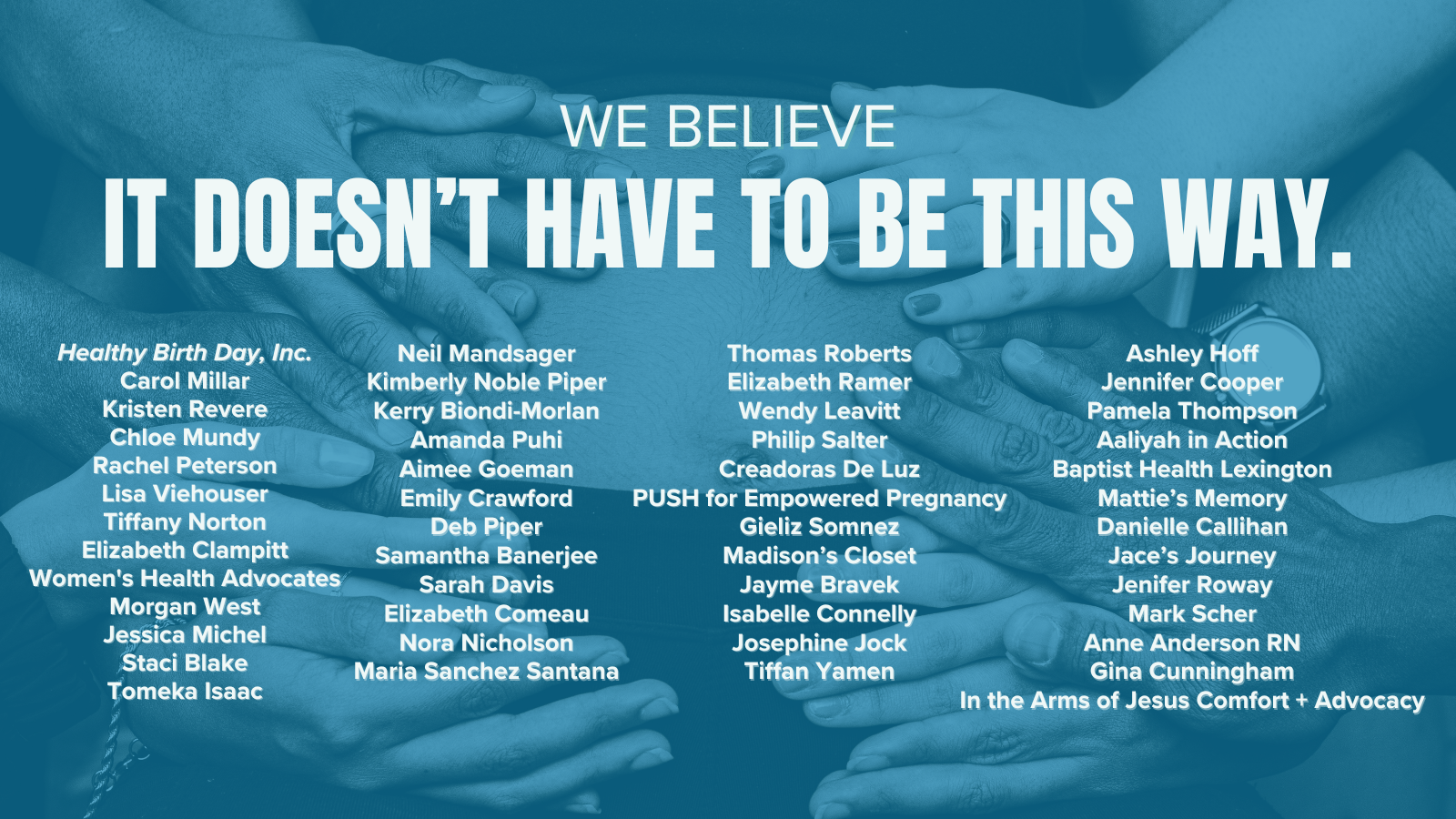
Add your name alongside supporters across the country who believe we can do more to prevent stillbirths and improve birth outcomes for moms and babies.